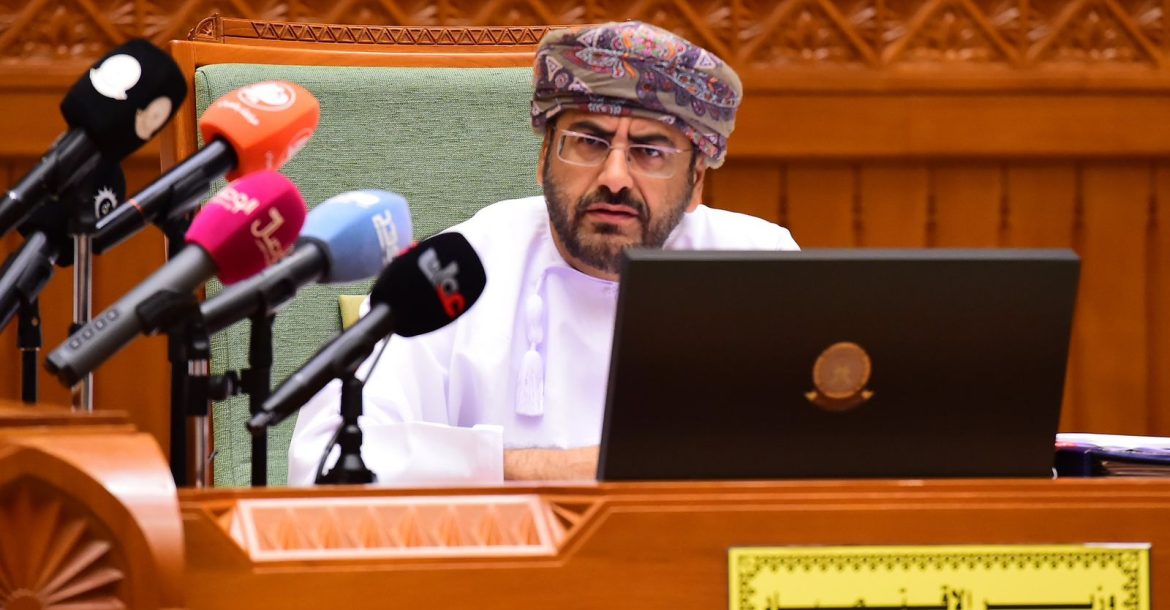

Muscat – Speaking at Majlis Al Shura’s 5th regular session of the first annual convening for the 10th term (2023-2027), H.E. Dr. Said Mohammed al Saqri, Minister of Economy, addressed the inherent variability in labour market data, shedding light on key statistics for the year 2022.
According to Al Saqri, a notable influx of expatriate workers was recorded, with approximately 500,000 entering the labour market. However, this was counterbalanced by the departure of 300,000 expatriate workers from the same market.
The data methodology is explained in the annual statistical bulletins, he added.
Reviewing the purchasing power of Omani Rial, he indicated that there is no decrease in it due to the rise in prices and pointed out that data indicate an increase in local liquidity by 6 percent, as well as an increase in the borrowing rate and in deposits.
Although prices of some goods increased by 23 percent, the average inflation, including rents, reached only 1 percent, which, the Minister explained, is the natural growth rate and within safe limits. It does not represent a burden on the nation, he stressed.
Following is a statement issued by the Minister:
“The preparation period for the tenth five-year development plan witnessed many challenges and local and international changes, mainly represented by the outbreak of the Covid-19 pandemic in the year 2020, which had negative repercussions on various development programs and on the performance of the national economy, where the gross domestic product decreased by 3.4 percent in 2020, or the equivalent of RO 1,176,000,000.
“To confront these challenges, the government has taken a number of policies and measures with the aim of bringing the Omani economy to recovery from the effects of the pandemic, improving economic performance, and raising its indicators. Among these measures are:
- Launching economic stimulus packages, such as tax exemptions and interest-bearing financing, direct financial support to some affected institutions, and other measures
- Direct support to vital sectors, such as health, education, and basic services to ensure continued service provision
- Promoting e-commerce and online shopping by developing the infrastructure for e-commerce, and encouraging companies and institutions to provide online shopping services
- Strengthening health infrastructure and education by investing in health and educational infrastructure, including modernizing hospitals and medical facilities and providing technology, to improve the quality of distance education.
- Providing soft loans for projects to help overcome the economic impact of the pandemic.
- Facilitating procedures to attract foreign investment, including creating some tax facilities.
- Stimulating innovation and entrepreneurship by supporting entrepreneurs, and providing financing programs, training, and co-working spaces to encourage innovation and new business development.
Read More
- Sultan Haitham programme launched to support academic research chairs
- Oman Embassy urges citizens in Thailand to avoid renting motorcycles amid rising accidents
- Muscat Municipality announces night traffic closure of Al Khuwair service road exit until November 22
- Oman expands cultural reach, empowers youth through major initiatives in 2026
- Oman launches smartphone voting app for first-ever remote OCCI elections





