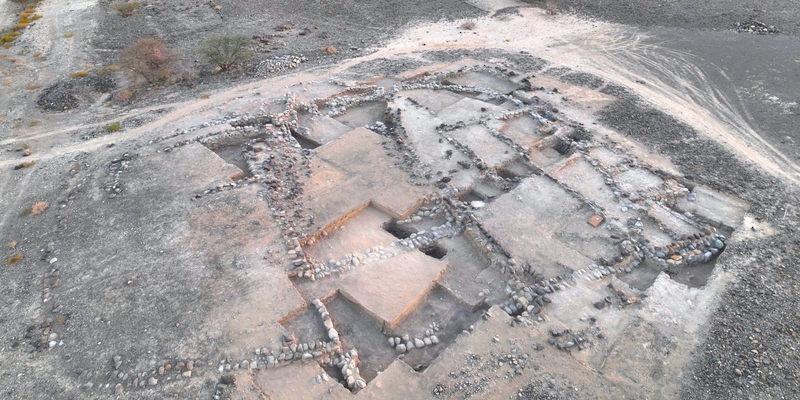
Muscat: During the culmination of its fourth season of excavation at the Al-Gharyan site in Al-Mudhaibi, North Al Sharqiyah Governorate, led by the esteemed Professor Dr Nasser bin Saeed Al-Jahouri, the archaeological team, including Dr Khaled Daghlas and Dr Muhammad Hussein, alongside a dedicated cohort of technicians and photographers, has uncovered a monumental architectural marvel that promises to redefine perceptions of Oman’s ancient heritage.
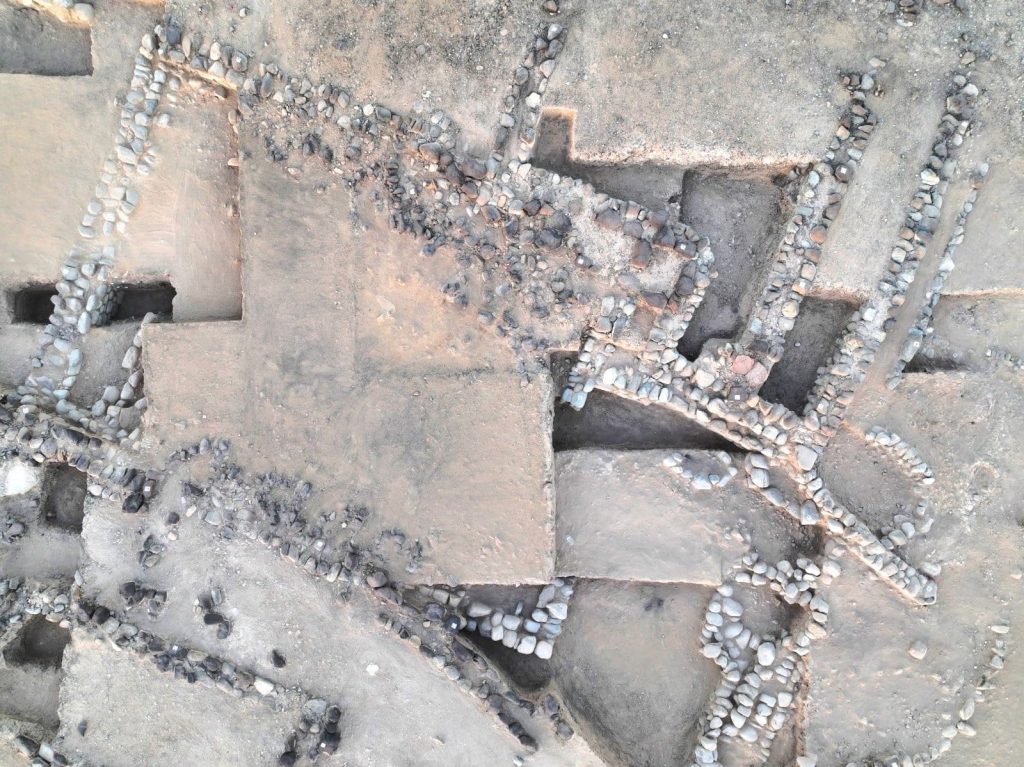
The Al-Gharyan site, situated on the northern fringes of Al-Gharyan village, approximately 95 kilometres southwest of Muscat, has emerged as a focal point for groundbreaking archaeological endeavours. The latest excavation endeavours, conducted throughout December 2023, have shed light on a singular structure unparalleled in scale and significance within the Early Bronze Age context of the Omani Peninsula.
Read More
- U.S. values partnership with Oman, Rubio says in National Day message
- Oman National Day: Beyond Khareef, Dhofar looks to ports and wind power for growth
- His Majesty Sultan Haitham presides over Oman National Day military parade in Izki
- GCC landmarks light up for Oman’s National Day
- Dawoodi Bohra community marks Oman National Day in Muscat
This remarkable edifice, spanning over 550 square meters, represents a departure from conventional architectural typologies observed in the region. Unlike its predecessors, which primarily comprised compact structures not exceeding 300 square meters, this imposing building stands as the largest and oldest non-tower construction discovered thus far in the Early Bronze Age landscape of Oman. Its distinctiveness extends beyond sheer magnitude, characterized by a sophisticated architectural blueprint hitherto unseen in the southeastern Arabian Peninsula.
Constructed as a rectangular fortification encased within an intricately crafted stone perimeter wall, the structure’s commanding presence is accentuated by a formidable gateway designed to welcome visitors into its expansive confines. Preliminary analyses suggest a multifaceted purpose for this enigmatic monument, hinting at its potential role as a communal or ceremonial hub rather than a residential dwelling.
Collaborating under the auspices of the Ministry of Heritage and Tourism, Sultan Qaboos University’s Department of Archaeology has meticulously excavated the Al-Gharyan site across four seasons since 2018, unearthing a rich tapestry of human habitation spanning millennia.
The archaeological team has delineated a sprawling settlement dating back to the Early Bronze Age, spanning the Hafeet (3000-2700 BC) and Umm an-Nar (2700-2000 BC).
Among the myriad finds unearthed during excavation expeditions are 37 structures from the Hafeet phase and over 21 edifices dating to the Umm al-Nar era, alongside a towering circular bastion and more than 50 sepulchres clustered along the settlement’s periphery. Furthermore, traces of Late Iron Age interments (900-300 BC) serve as poignant reminders of Al-Gharyan’s enduring legacy spanning epochs and civilizations.





