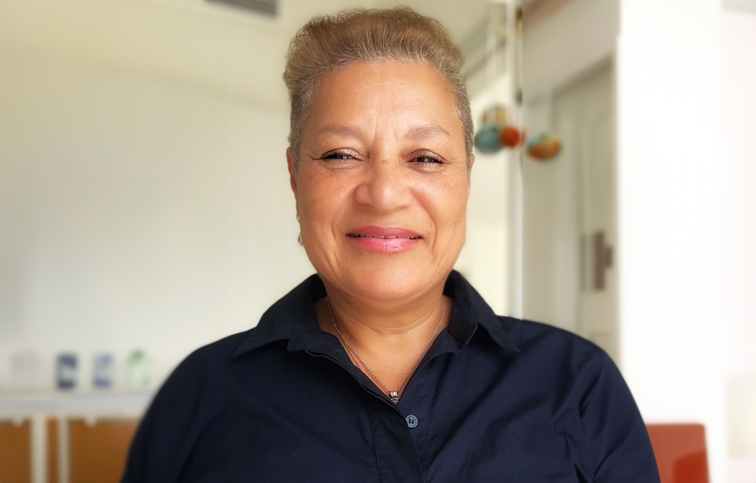
Muscat: It was a chance visit to a book shop and an almost impulsive purchase of a book on pottery that led Ibtisam Al Said on a journey to discover all the endearing facets of the craft and the element of creativity that the raw material imbues.
In her own words: “I found pottery, when I was visiting my daughter in Australia. Actually, I just walked into a bookshop and I saw a pottery book that said ‘Teachers of Pottery’. I bought the book; and, as they say, the rest is history.”
That book not just helped her master the art, but also become a teacher. “I just love pottery; I love to teach pottery. And I am a Potter,” she quips.
Read More
- Oman and Russia discuss expanding economic and investment ties
- Oman equestrian forum calls for committee to expand women’s participation
- Faisal Al Rawas puts private sector at centre of second term as Oman Chamber chairman
- Oman’s Al Hoota Cave draws nearly 3,900 visitors during National Day holiday
- Unlicensed fundraising in Oman carries fines of up to RO 1,000, three-month jail term
The start may have been serendipitous, but her passion for craft was innate. Talking about her fascination for handicrafts, she says, “I was doing mosaics at the time. We lived in Germany, and my daughter wanted to do a mosaic project for school. I continued doing that for a few years. But pottery was more interesting for me – it still is. I work on my pottery every day, creating and learning new skills and techniques.”
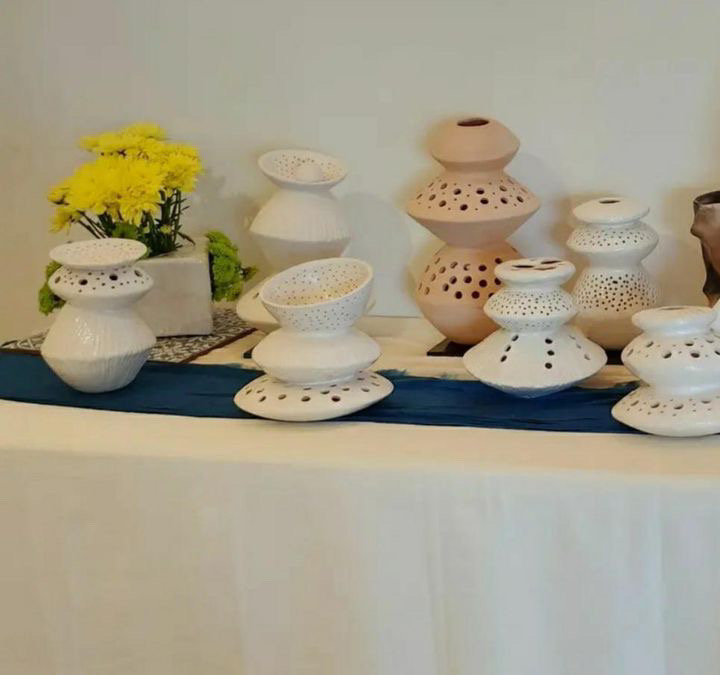
About the style she follows, she states: “Japanese style is my favourite; I love blue and white ceramics. My style is ‘wabi-sabi’ (beauty in imperfection). I do not strive for perfection – my pieces are not preplanned. I just make my pieces without any plan, and I am happy with whatever the outcome.”
Explaining further, she says, “My ceramics are primary functional tableware; it warms my heart that my dishes are there in people’s homes, in celebrations, and comforting them in sad times. I have lived in many countries due to my husband’s job as an ambassador, I have participated in many exhibitions and diplomatic bazaars, and here in Oman at the Affordable Art Exhibition where I participate with decorative ceramics.”
And about her love for teaching the craft, she has this to say, “Teaching pottery is a joy for me; it’s so rewarding when my students enjoy and love the pieces they make in class. I would like to see more young people learn pottery so they can enjoy having this wonderful skill. I pray and I hope that I will be making and teaching pottery for many years to come.”
Ibtisam Al Said’s journey as an art teacher stemmed from her love of pottery and continued with her fervent hope that more people would do pottery, because, as she states, “it’s really a nice medium to work with.”
“and I love working with it and I would love more people to learn how to make pottery,” she adds.
The primary materials and techniques she uses in her craft are earthenware clay and stoneware clay. “For me, these are the two clays that I can manage to work with. I sometimes colour the clay because I also like the Japanese shibori, which is a tie-dyeing technique, and I use a lot of blue. So, I would colour the clay to blue so that I can get the Shibori effect,” she explains.
Talking about artistic and cultural influences in her work, Ibtisam Al Said says, “I am very much in love with the Japanese pottery, and there’s a very old Japanese potter named Shōji Hamada – I love his work. I could aspire to be as good as he was, but well, I’m really in love with the Japanese pottery.”
When asked about her creative process – from ideation to finish – she says, “It’s not a big process, actually. I just decide I want to make, say a plate or a vase…I don’t plan. I don’t draw. I don’t make any sketches. It’s all just in my head, and sometimes I will start with an idea and end up with another idea. So yes, not much planning…it’s more of an abstract method.”
Like all artists, Ibtisam Al Said also faces creative blocks on certain days, and when that happens she says she just pauses; takes a rest. “If I am having a block, I just don’t do anything. I may do something else, like mosaics or tie-dyeing… So, if I cannot think straight to do pottery, I’ll just pick something else. As long as I am working – I can never just sit idle,” she muses.
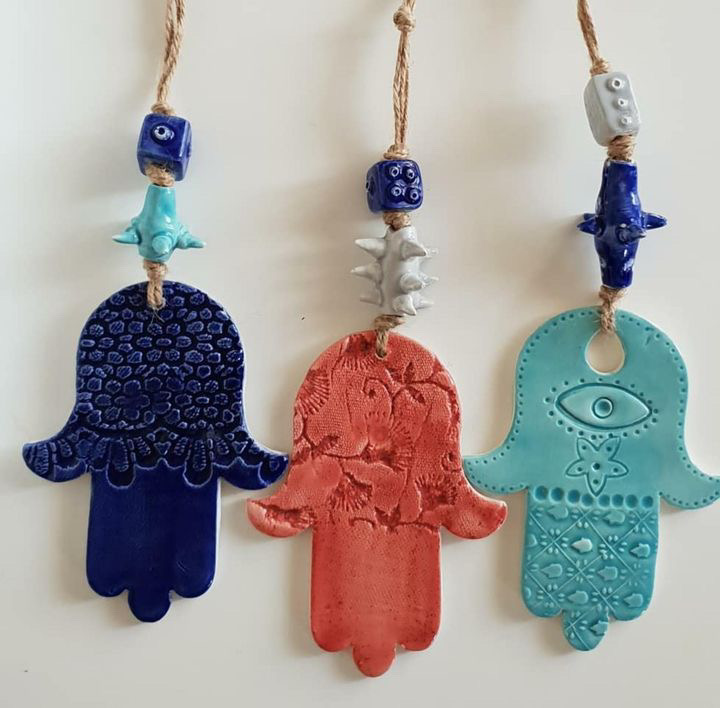
Although she does not have a signature style in pottery or handicrafts, she does have her preferences, which, as she points out, is colour blue. “If you see something blue, it’s probably made by me. I also like working with lace. I like the hand of Fatima, which is the hand that supposedly wards off the evil eye. It’s just a myth, but I love to use those two,” she states.
As far as challenges are concerned, she maintains that there are not really any issues once she has the clay in her hand. Basically, unavailability of clay is the only challenge she has faced.
Rewarding experience
Sharing some of the rewarding experiences in her artistic journey, she lists her volunteering work with children as the most memorable ones. “I normally volunteer to work with children wherever we are posted. I have worked with children in orphanages and children with Down syndrome, and it’s really rewarding working with them and seeing what they can produce. The happiness on their faces, once they have created something, is rewarding,” she states.
Favourite project
While every piece of craft/artwork created has its own place, there are some that can easily be classified as favourites, and Ibtisam has a few too. “Well, I create things to sell, but sometimes I really don’t want to sell some pieces. I want to keep them; I just love them and I feel close to them,” she adds.
Pottery community
There is a growing local and global handicrafts and pottery community and Ibtisam Al Said has found a way to engage with such enthusiasts. Highlighting the importance of this growing community, she says, “When I first started, I think there were maybe two or three of us doing pottery – other than the main potters of Bahla, of course. We then had a very small community, which is now growing. It’s really growing very fast. And yes, we just meet and get-together and enjoy talking about pottery.”
Future aspirations
Her future aspirations are just to make better and bigger pottery. “I would love to make big pots,” she quips.
As far as future events are concerned, she is all excited about the Affordable Art exhibition that is scheduled to be held in December. “I am looking forward to that and I am working hard at the moment to prepare for it,” she adds.
Advice for wannabe potters
For all aspiring potters and folks who are just starting their journey as handicraft or pottery artist, this is what Ibtisam Al Said has to say: “My advice is to start slow. You could aim high, but I would just keep it slow and go easy. And don’t be in a hurry to make pottery…It comes to you slowly.”