

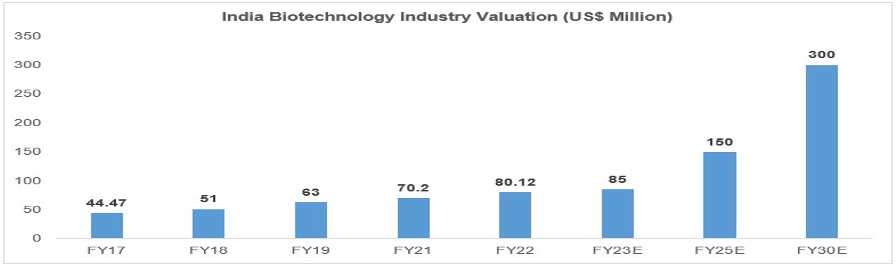
India is regarded as one of the leading destinations for bio innovation and bio-manufacturing. India is ranked third in Asia and is one of the top 12 biotech destinations in the world. In the last eight years, India’s bioeconomy industry has expanded eightfold, from US$ 10 billion in 2014 to more than US$ 80 billion in 2022 and is expected to surpass US$ 150 billion by 2025 and over US$ 300 billion by 2030. India is well-positioned to take part in a new global wave of industrial revolution arising from recent advancements in biotechnology to build more sustainable manufacturing practices due to its fast-expanding bioeconomy and growing scientific and innovation temper.
Biotechnology Industry in India
India’s bioeconomy industry accounts for approximately 3% share of the global Biotechnology industry. India has the second-highest number of USFDA-approved manufacturing plants outside of the United States. India is the world’s top supplier of DPT, BCG, and measles vaccines. In 2021-22, the Indian Bioeconomy sector contributed nearly 2.6% share in India’s Gross Domestic Product (GDP).
Read More
- Three expats arrested in Muscat’s Seeb with over 166,000 psychotropic tablets
- Viksit Bharat 2047: India’s roadmap to becoming a developed nation
- India’s space sector emerges as a new engine for global partnerships
- India strengthens its role as a trusted global first responder
- India’s citizen-centric diplomacy revolutionises welfare and support for overseas diaspora
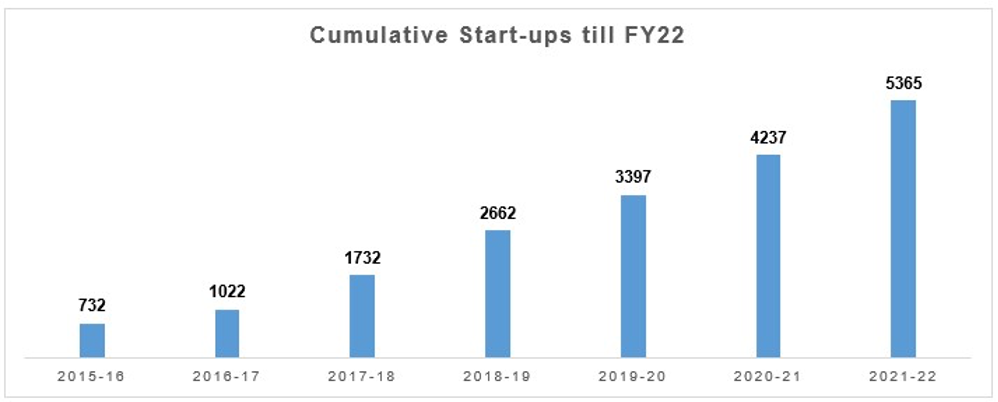
Due to the expanding enabling ecosystem, the number of biotech start-ups in the nation has surged from 50 to over 5,300 in the last ten years. Biotech start-ups emerging from a robust talent pool are predicted to further double, exceeding more than 10,000 by 2025. In 2021, BT Cotton, Biopesticides, Biostimulants, and Biofertilizers contributed around US$ 10.48 billion to the country’s bioeconomy.
Market Size
According to current projections, the industry is estimated at US$ 80.12 billion in 2021-22 and is projected to grow to US$ 150 billion by FY25. India’s bioeconomy surpassed US$ 80.12 billion in FY22, registering a rise of 14.1% over US$ 70.2 billion in FY21. The Indian biotechnology industry has the potential to reach US$ 300 billion by the year 2030.
Source: Department of Biotechnology (DBT)
Segments
In the Indian bio-economy market, biopharmaceuticals and the medical devices industry are the two largest segments, accounting for nearly 62% of the total contribution. India’s Biotechnology sector is categorized into 5 segments:
Biopharmaceuticals
India is one of the world’s largest suppliers of affordable medications and vaccinations. India is a global leader in biosimilars, with the most biosimilars approved in the domestic market. It accounts for the largest share, contributing 49%, amounting US$ 39.4 billion of the total Indian Bioeconomy industry in CY21. The vaccination market was estimated at US$ 8.7 billion, excluding Covid-19 Vaccines. While therapeutics had a market value of US$ 10.3 billion and diagnostics had a value of US$ 20.4 billion in FY22.
Bio Agriculture
India is one of the world’s top producers of BT-Cotton and has the fifth-largest area of land used for organic agriculture, with over 55% of the country’s land covered by agriculture and related activities. The Bio-Agri segment is estimated to be US$ 10.48 billion. The biopesticides, biostimulants, biofertilizers, and BT cotton constitute the bio-agriculture segment.
Bio industrial
The integration of biotechnology into industrial processes is revolutionising manufacturing and waste management across India. The Bio Industrial market was valued at US$ 10.3 billion in 2021, with a robust CAGR of 101.3%. Biofuels / Bioenergy and Industrial Enzymes are the two verticals that make up the Bio Industrial segment. In FY21, the Enzymes industry experienced a strong growth of 65.7%, while the Biofuels sub-segment experienced a phenomenal growth of 138.8%.
Bio Services
They are aids and services offered to clinical trials, healthcare sectors, biotech firms, and educational initiatives to increase support and research so that these entities can channel and strengthen their research progress. India has the most US FDA-approved facilities worldwide, outside of the US and has a strong competence in contract manufacturing, research, and clinical trials.
Bioinformatics/IT
It is the use of computer technology to comprehend and utilise biological and biomedical data effectively. It gathers Big Data from clinical or life sciences investigations and stores, analyses, and interprets it.

Source: Biotechnology Industry Research Assistance Council (BIRAC)
Startup Landscape
The rise of India’s biotech start-up base (the total number of companies filed since 2010) is expected to continue in 2021. The overall number of biotech start-ups increased to 5,365 in 2021, up from 4,237 in 2020. In 2021, the total number of startups increased by 26.6%. For the first time ever, in FY22, the biotech sector in India had more than 1,000 new start-up registrations in a single calendar year.
Source: Biotechnology Industry Research Assistance Council (BIRAC)
Government Initiative on Biomanufacturing
A national initiative “Fostering High Performance Biomanufacturing: An integrated approach towards promoting Circular Economy for Green, Clean and Prosperous India” has been proposed by the Department of Biotechnology. This initiative’s foundation is made up of advanced biotechnology tools such as synthetic biology, gene editing, metabolic engineering, and so on. It is believed that building a biomanufacturing program’s capacity for synthetic biology requires a robust national infrastructure platform.
The ‘Lifestyle for the Environment (LiFE)’ initiative launched on October 20, 2022 by Prime Minister Modi encourages us to use green and friendly environmental solutions in all aspects of life in order to effectively meet climate and energy goals. As a result, a pan-India biomanufacturing programme based on biomass/waste resources can assist meet rising consumer demand, increase the country’s economy, and put the country on pace to achieve net-zero carbon emissions.
***
Source: India Brand Equity Foundation (IBEF)





