
The practice of reading is an invaluable habit that everyone should cultivate. Personally, I have a deep passion for reading novels, above all other genres. Additionally, I find great enjoyment in exploring the lives of remarkable individuals through biographies.
While I won’t delve into the details of the first two biographies I read, I would like to share my experience with the third biography I encountered, which happened to be about Steve Jobs, and left a lasting impression on me.
Delving into someone’s biography offers a glimpse into their struggles, triumphs, failures, successes, and overall lifestyle. Steve Jobs was certainly one such individual whose biography encapsulated these aspects.
Read More
- Before MBAs and marketing: Timeless business lessons from Prophet Mohammed
- What Shakespeare knew about economics before economists did
- Respect is earned, not expected: Rethinking the teacher-student relationship
- Never underestimate a woman who enjoys her own company
- Rethinking schooling in the age of Artificial Intelligence
Novels, on the other hand, possess their own unique qualities, much like the authors who pen them. Unlike the tangible creations of Steve Jobs, such as the iPhone and iPad, novels are not mere products.
I can still vividly recall the yellow Kodak camera my father bought me when I was a child, evoking nostalgia. Novels cannot be compared to bank products like credit cards, savings or current accounts, or digital banking channels.
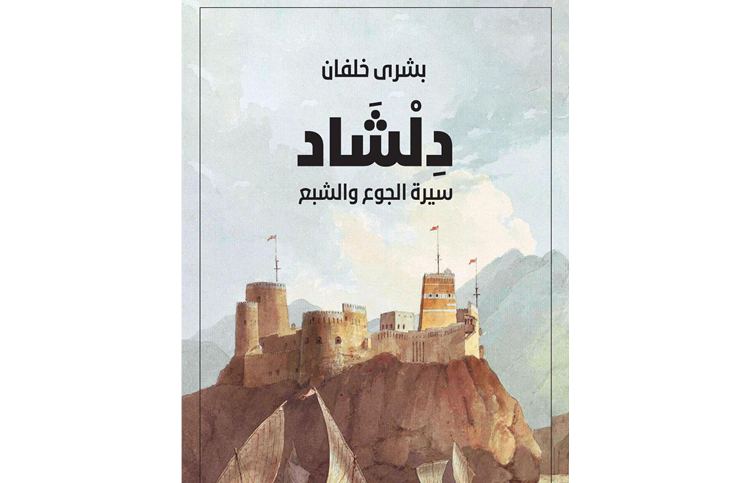
Recently, I immersed myself in “Dilshad,” the latest novel by Bushra Khalfan Al Wahaibi about hunger and satiety. Through its pages, I was transported to the bygone era of Muscat, gaining insight into the lives of its inhabitants, their struggles, and moments of fulfillment.
Upon beginning the novel, my attention was immediately drawn to its title. “Dilshad” is not an Arabic word; rather, it is a Balochi name meaning “Happy Heart,” comprising two words: “Dil” and “Shad.”
As I progressed in my reading, I discovered vivid descriptions of old Muscat and its cultural tapestry, providing a glimpse into the livelihoods of its people. The author conducted thorough research, carefully depicting events, individuals, dwellings, tents, trade, and travel methods.
In a YouTube video, Bushra remarked: “The novel revolves around Muscat itself, rather than individual characters.” She further expressed her intention to showcase how Omani people have contributed to history and how history has shaped Oman in her novels.
Interestingly, during the initial chapters, I encountered lines written in the Balochi language. This raised questions in my mind: What significance did this language hold in the culture of Muscat during that era? Was Muscat a melting pot of diverse cultures in that century? How did Bushra manage to incorporate this language into her novel?
On page 14, she eloquently wrote in Balochi, employing a poetic style:
Man Rawa rahe sara nenda
Pishoka senda ma socha binda
Balkna wati dosta ginda
The simple meaning of these verses go as:
I sit by the driveway waiting, and
Spin the palm wicker and tie it,
I may see my friend.





