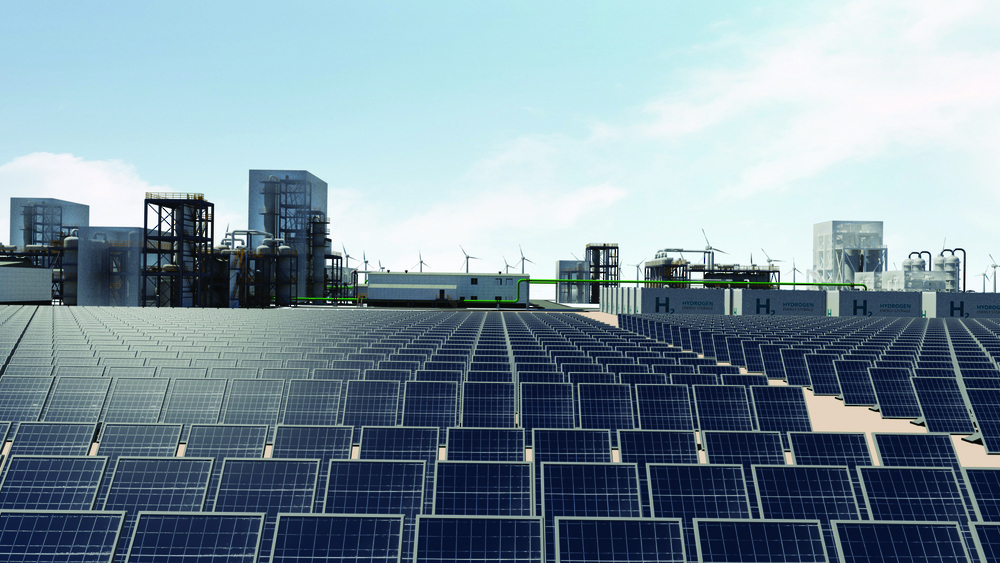

Muscat: A recent report issued here affirmed that the Sultanate of Oman is on its way to become one of the largest exporters of hydrogen in the world by 2030.
The report, issued jointly by the Ministry of Energy and Minerals and the International Energy Agency (IEA), demonstrated Oman’s competitive potential as a hub for renewable energy and hydrogen.
The report was reviewed during a visit made by an Omani delegation to the IEA’s headquarters in Paris. The delegation was headed by Eng. Salim Nasser Al Aufi, Minister of Energy and Minerals.
Read More
- Oman opens registration for 2027 ‘Together We Progress’ forum
- IFC Oman registers first 13 companies, eyes early 2027 licensing
- Oman secures major trade deals at Big 5 Dubai, boosts non-oil exports
- Oman rolls out diesel subsidy cards from Dec. 1, keeps rate at 258 baisa a litre
- His Majesty Sultan Haitham sends letter to Pakistan PM Shehbaz Sharif
Oman has allocated an area of more than 50,000 square kilometres in the governorates of Al Wusta and Dhofar for green hydrogen projects to be floated in stages. This is in addition to 15,000 square kilometres in other governorates for clean energy projects.
Oman plans to produce more than one million tons of green hydrogen by 2030. The plan provides for the exploitation (by the year 2050) of up to 30 percent of the land currently allocated, to produce about 8 million tons. The investment value of the projects is expected to stand at $140 billion.
Recently, Oman has taken major steps to keep pace with global developments in energy transition and climate change. As a result, Oman announced its commitment to achieve carbon neutrality, or zero carbon emissions, by 2050.
The country also outlined salient features of its green hydrogen strategy. It also announced having finalized regulatory and legal frameworks, as well as the preparation of policies necessary for the march forward in projects and plans of green energy transition.