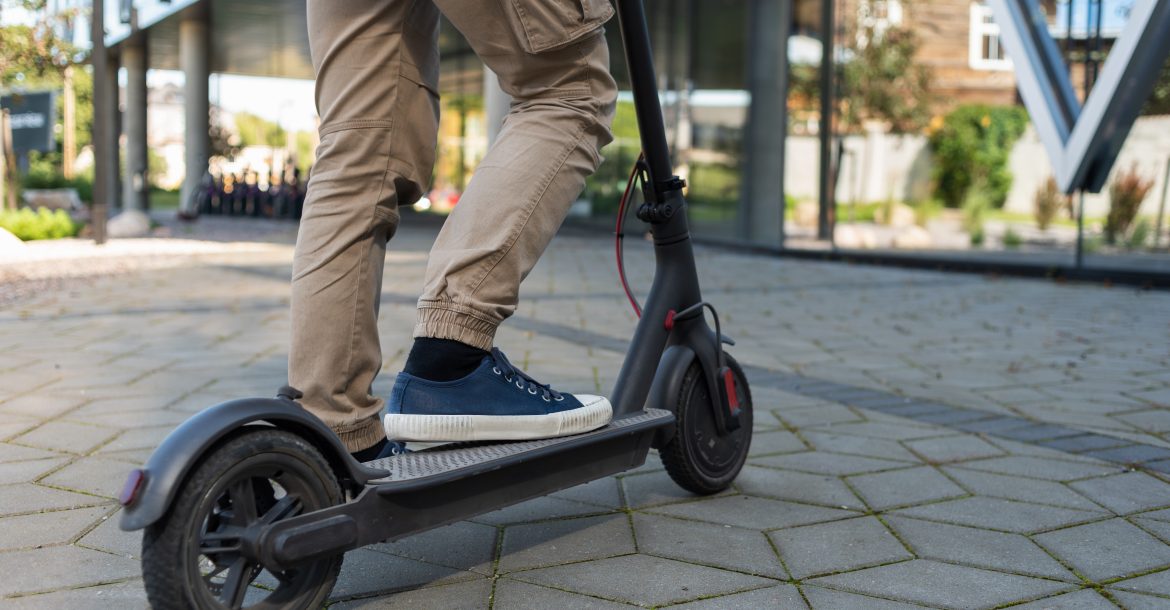

Muscat: For a country that wears its passion for cars on its sleeves, the growing popularity of e-scooters is proving to be an enigma, making onlookers wonder if it is the beginning of a transition towards micro-mobility. It is, perhaps, the element of novelty that makes people driving past in cars turn around to assess the ease with which riders manoeuvre their bikes.
Designed to empower people with simple and convenient travel (short distance) e-scooters are seen as practical alternatives to other traditional modes of transport, which require huge maintenance, designated parking spots and the hassle of traffic congestions. With prices ranging between OMR 150 to OMR 300, it is, literally, a breeze for commuters who are looking for convenient options to travel short distances. They are easy on the pocket, effortless to park and practical on busy roads.
They are environmentally friendly options that fit into the government’s sustainability agenda.
Read More
- Oman opens registration for 2027 ‘Together We Progress’ forum
- IFC Oman registers first 13 companies, eyes early 2027 licensing
- Oman secures major trade deals at Big 5 Dubai, boosts non-oil exports
- Oman rolls out diesel subsidy cards from Dec. 1, keeps rate at 258 baisa a litre
- His Majesty Sultan Haitham sends letter to Pakistan PM Shehbaz Sharif
As Tarek Abi Shakra, Business Manager of Al Khalili United Enterprises, notes, the last two years have seen the market for e-scooters picking up in the country. “There are around 5,000 to 7,000 e-scooters in the market, and the numbers are growing daily,” he observed.
According to him, the demand is more among expatriate workers; however, locals too have demonstrated their penchant for the reliable electronic bikes and scooters, which are easy to manoeuvre on service roads and easier still to maintain. The availability of charging stations in some malls is adding to the popularity, more so with the Ministry of Transport, Communication, and Information Technology explicitly stating its intent to work with the private sector in installing 140 chargers by the end of 2023 and over 350 general chargers by 2026 to cover most of the main roads in the country.
What adds to the popularity of e-scooters – in Oman as well as other countries in the region – is that there are minimal regulatory requirements and users do not need a license to ride one on the roads here. However, online reports have indicated the requirement of wearing reflective vests and restricting movement on main highways. Some sources have also pointed out that, as per the regulations specified by the Royal Oman Police, e-scooters can only be used on pavements and sidewalks – provided they do not hamper the movement of pedestrians.
The most important rule, nevertheless, is that the rider should be 18 years and above, noted Shakra, adding that one should wear a “safety helmet and safety gear with front lights or reflecting lights.”
As far as the availability is concerned, he stated: “You can find e-scooters in electronic stores such as Buildex, etc., and the price varies depending on the make, starting from OMR 150 up to OMR 290.”
Online reports on micro-mobility indicate that the winds of change are also blowing in the Middle Eastern countries, with consumers opting for electronic bikes and scooters for easy commuting.
On the global front, market-size of e-scooters is growing year by year. According to market research company Precedence Research’, global market was estimated at USD 33.72 billion last year, which is expected to cross USD 88 billion by 2032. It is expected to grow at a compound annual growth rate of 10.16% from 2023 to 2032. Verified Market Research, another consulting firm, valued the market size at USD 41.1 billion in 2022 and projected it to reach USD 486.5 by 2030.
In the neighbouring Dubai, as per the country’s Roads and Transport Authority, shared e-scooters made about one million trips in 2022, doubling the number that had been recorded in 2021.
Most countries have welcomed electronic scooters and bikes, with specific apps developed by the private sector to offer rental services. As an environmentally sustainable initiative, these vehicles are expected to grow considerably in the near future, encouraging the public to embrace micro-mobility.