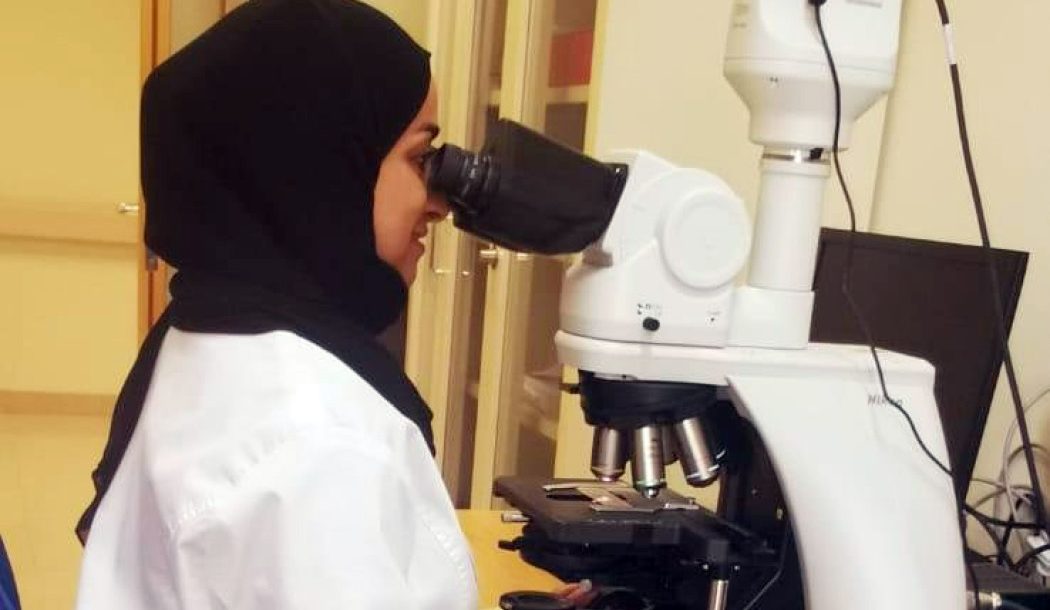

MUSCAT: An Omani researcher has succeeded in manufacturing a 3D laboratory cellular environment that mimics the natural environment of a cancerous tumor.
Researcher Dr. Noura bint Rasool Bakhsh Al Balushi achieved promising results in manufacturing a three-dimensional cellular environmental model in a laboratory tube that simulates the complex natural biological and chemical environment of cancer cells in the human body.
The results of the three-year study was published in a Swiss scientific journal.
“It is well known that tumors are complex cellular ecosystems with different types of cells, fibres and proteins that secure the rapid and continuous growth of cancer cells,” the researcher said.
Read More
- HH Sayyid Shihab presides over recital of Prophet’s life story at Al Alam Palace
- Oman’s CPA shuts travel agency in Rustaq over failure to deliver promised services
- Oman expands organic farm Yuzu to boost food security and local production
- Oman to host ICESCO delegation in Dhofar to strengthen cultural diplomacy and cooperation
- Dhofar Municipality launches wage support scheme for seasonal Omani workers
In the research, she added, “I synthesised a three-dimensional cellular environment similar to that found in a tumor by culturing cancer cells, fibres, immune cells and special proteins that form an array of functionally programmed peptide sequences into a gel known as a hydrogel.
She stated that she had studied the behaviour and characteristics of cells such as growth, movement, division, and interaction with the various factors surrounding them in the laboratory environment, including chemical and biological materials, using advanced radiological and analytical devices.
She added, “The results showed that this three-dimensional cancer cell model helped a lot in understanding the nature and behaviour of those cells compared to the traditional two-dimensional method.”
These results will contribute to enhancing the current understanding of what cancer is and updating the knowledge related to such environments suitable for the cultivation of cancer cells. This low-cost cellular environment can be used to test cancer treatment drugs and prove their effectiveness.





