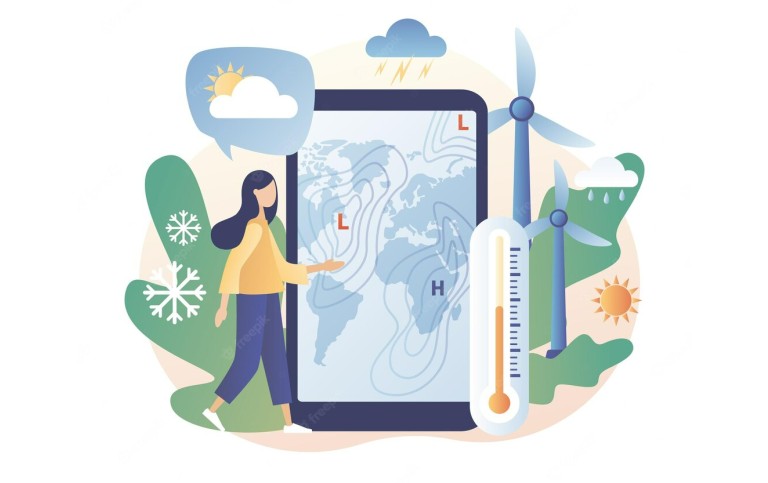

MUSCAT: Are you inclined towards understanding climate and weather? Do you find atmospheric dynamics and weather patterns fascinating? Then you might want to think about specialising in meteorology. Why?
Meteorologists and hydrologists work for a great variety of employers – from national weather services and research institutes to private companies, airports, police agencies and more.
What does the job entail?
Read More
- Oman records highest temperature of 46.2°C
- Heavy rain and hail lash Oman’s Al Buraimi, triggering wadi flows
- Honourable Lady visits Omani Women’s Association in Salalah
- Oman Foreign Minister holds talks with Tunisia, Brunei on bilateral ties and global developments
- Oman, Kazakhstan review bilateral ties and regional developments
Understanding, observing, and predicting atmospheric occurrences and their potential repercussions on the earth are all part of the job of a meteorologist. Despite the fact that the majority of people link meteorology to weather reporting and forecasting, not all meteorologists are weather reporters. There are numerous subfields within the discipline of meteorology.
The array of abilities and information needed by meteorologists has greatly expanded in today’s complicated environment. More and more, meteorologists must be able to inform a variety of consumers as quickly as possible about the potential effects of weather, climate, and water dangers.
They must stay abreast of new developments in science and pertinent technology, but some also require highly specialised knowledge, such as the ability to convert raw data into maps and charts for specific purposes.
Growing need for meteorologists
Forecasters are also used by national militaries to organise their plans and safeguard their personnel and equipment. With the use of cutting-edge technology, they take on challenging problems including maintaining the safety of aeroplanes, lowering urban pollution, creating climate change legislation, and providing sustainable development advice.
All that needs to be said in the end is that meteorologists play a key role in national initiatives to advance public health and safety. They aid in identifying disease outbreaks that are water and airborne to offer early warnings when a storm or flood poses a risk to lives and property.
So, young adults out there, the next time anyone asks you who you want to become — would you consider being a meteorologist?

Did you know?
Around 340 BCE, the Greek philosopher Aristotle published the first comprehensive study of the atmosphere. But because Aristotle didn’t think it was important to do scientific research, many of his theories were flawed.





