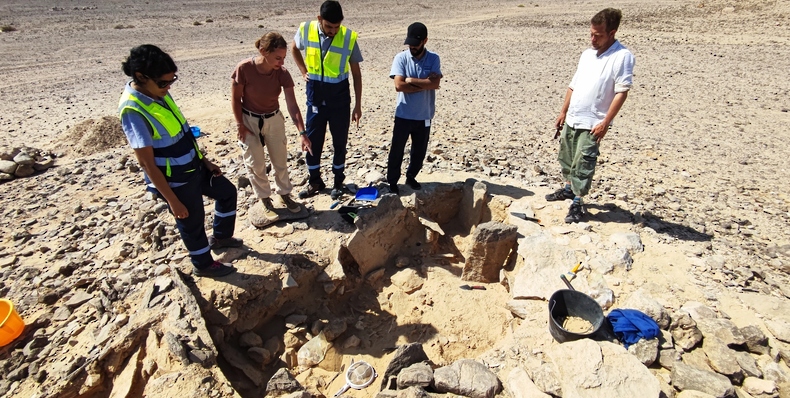

MUSCAT: A team of archaeologists and specialists from the Institute of Archeology of the Czech Academy of Sciences concluded that they monitored 155 archaeological sites in the village of Nafoon and about 900 archaeological sites in the Wilayat of Duqm in general between 2015 and 2022 during excavation studies.
The General Authority for Special Economic Zones and Free Zones, in cooperation with the Ministry of Heritage and Tourism and in coordination with the Institute of Archeology of the Czech Academy of Sciences paved the way to conduct the study and monitoring of archaeological sites in the Wilayat of Duqm and the village of Nafoon located in the Special Economic Zone of Duqm.
The archaeological studies and research conducted by the specialised team that came from the Czech Republic, the United States of America, Ukraine, Italy, France and Germany focused on the fact that the village of Nafoun in Duqm is characterised by the existence and settlement of the ancient human being.
Read More
- Palakkad Friends Community marks Onam, 13th anniversary with grand celebration in Muscat
- Oman’s CPA shuts marble and ceramic trading firm in Rustaq over consumer complaints
- Saudi Airlines to launch direct Muscat-Riyadh flights from October 27
- Oman, Saudi Arabia to strengthen economic partnership at 7th coordination committee meeting
- Consumer Protection Authority seizes 1,236 non-compliant school products in Muscat
In addition to excavating mass graves of the Iron Age and discovering the triple stone monuments (Terlit) and the coastal settlement of the rocky hills, these specialists also studied the stone tools used by humans in the Paleolithic Age in the Wilayat of Duqm.
The General Authority for Special Economic Zones and Free Zones, in cooperation with the Ministry of Heritage and Tourism, has documented these settlements of ancient humans dating back to the Iron Age and archaeological sites for the purposes of research and study and providing the necessary protection for archaeological monuments in the Wilayat of Duqm.





