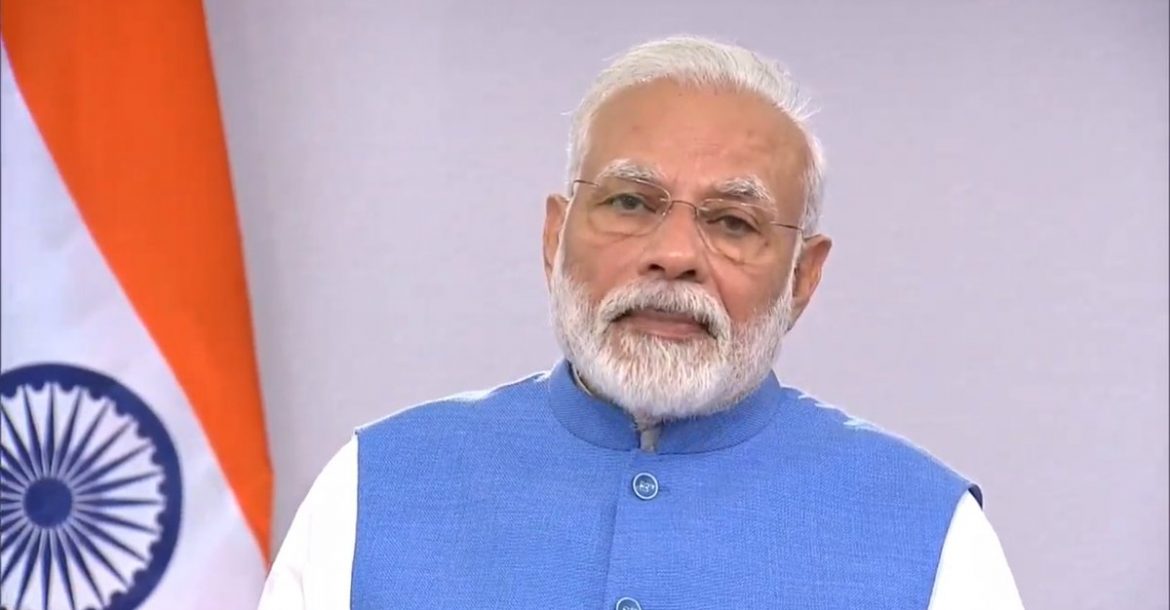

NEW DELHI: The Aatmanirbhar Bharat Abiyan (ANBA), announced during the peak of COVID19 pandemic has now evolved into a major program for enhancing national capacities of India to make a stronger contribution globally. Prime Minister Narendra Modi initiated ANBA when he announced a special comprehensive economic relief package of approx US$ 270 billion (equivalent to 10% of India’s GDP), in May 2020. ANBA caters to the increased need for a more trusted, resilient, reliable and redundant supply chain in the wake of COVID19 pandemic. ANBA is a bold scheme having potential of transforming manufacturing sector in the country for steering it onto the path of rapid development and growth.
2. With the advent of the novel Coronavirus pandemic, a new world economic order was emerging and nations were just coming to terms with it. India’s Government under the leadership of PM Modi quickly realized this and altered existing policies and introduced several muti-sectoral initiatives with a vision of ‘Vocal for Local’ – use of indigenous products and its promotion in global markets. The initial steps for Aatmanirbhar Bharat were taken during the course of the pandemic, be it the production of PPEs and masks, or indeed of ventilators and testing kits.
3. PM Modi stated India has the talent, qualitative and quantitative production capacity with a strong supply chain to become self-reliant, which stands on five pillars: ‘economy’, that introduces quantum jump; ‘infrastructure’ in tune with the new India, a ‘system’ based on 21st century technology; India’s ‘vibrant demography’; and ‘demand’, which will utilize our requirement and supply chain to full capacity. Government’s plan of turning this crisis into opportunity had a two pronged approach: undertaking of interim measures such as liquidity infusion and direct cash transfers to migrant workers and daily-wage earners; and long-term labour and legislative reforms, among others, in growth-critical sectors that will make them globally competitive and attractive with the main focus on credit provision, infrastructure, access to market, skill development and identifying job creators.
Read More
- UAE residents receive missile alert as air defences respond to threat
- Massive fuel depot fire in Iraq injures around 30, burns 3 million litres of gasoline
- Pakistan Supreme Court orders former Prime Minister Imran Khan to be moved to the hospital over health concerns
- Wildfire crisis deepens across Europe as France launches €12mn aid plan
- Indians in Qatar can now send funds directly to UPI-enabled bank accounts in India through Qatar Post outlets
4. ANBA seeks to build greater global partnerships on the basis of a stronger and self-reliant India. In the words of Prime Minster, “When India speaks of becoming self-reliant, it does not advocate a self-centered system. In India’s self-reliance, there is a concern for the whole world’s happiness, cooperation and peace.” Engagement with the world is fundamental in India’s beliefs and traditions. During the pandemic, India emerged as a “Pharmacy of the World” and not only met its own medicine requirements but supplied to the rest of the world. As we now look at the supply of vaccines, Prime Minister has assured that we will live up fully to our international responsibilities.
5. ANBA also provides greater opportunities to our diaspora across the world to be a partner in India’s growth and development. Our diaspora can bring in resources, technology, best practices and innovations towards the endeavor of self reliant India.
6. Under ANBA, a number of measures have been announced by the government towards incentivising business and investment focused growth, enabling investment and trade reforms, opening up India as an investment destination in various sectors including minerals, defence, space, atomic energy, civil aviation, coal and agricultural sectors. Infact, the structural reforms in the agricultural sector, such as amendments to Essential Commodities Act or agricultural marketing reforms or allowing barrier-free Inter-state trade and enabling an environment for contract farming, are even being characterized as a “1991 moment for Indian agriculture”. Apart from these, ANBA package announced earlier provides relief to the poor, and support to the rural workers and farmers. These initiatives include Pradhan Mantri Matsya Sampada Yojana (PMMSY): allocation of food grains to migrants; Pradhan Mantri Vaya Vandana Yojana: additional funding of up to Rs 3 lakh crore for MSMEs; Scheme for Formalization of Micro food processing Enterprises (FME); and others.
7. Recent announcements include:
- Third stimulus package was announced in November 2020 with an aim to increase employment opportunities, support multiple sectors through Production-Linked Incentives (PLIs) as well as extension of the Emergency Credit Line Guarantee Scheme (ECLGS) to non-MSMEs as well.
- Atmanirbhar Bharat Rozgar Yojana, an employment scheme for the creation of new employment opportunities amid the ongoing COVID-19 pandemic, with an overall allocation of US$ 4.9 billion.
- Over and above the Budget estimates for 2020-21, the Government of India has allocated US$ 2.4 billion towards the Prime Minister Awaas Yojana – Urban (PMAY-U).
- Incentives for the Agriculture Sector and Rural Employment to the tune of US$ 10.2 billion.
- R&D Grant Towards COVID-19 Vaccine Development.
- In December 2020, New Development Bank (NDB) and GOI signed a US$ 1,000 million agreement to support ANBA through Mahatma Gandhi National Rural Employment Guarantee Act. NDB’s timely assistance will help the Government in combating the economic disruptions caused by COVID-19 pandemic and creating employment opportunities in rural areas to stimulate demand.
8. The ANBA will help revive every sector of the Indian economy including the demand and supply chain and the manufacturing sector. The package will form the path for the revival of the Indian economy, which will, in turn, play a major role in making India self-reliant. A self reliant India with greater capacities will be an engine of growth for the global economy.





