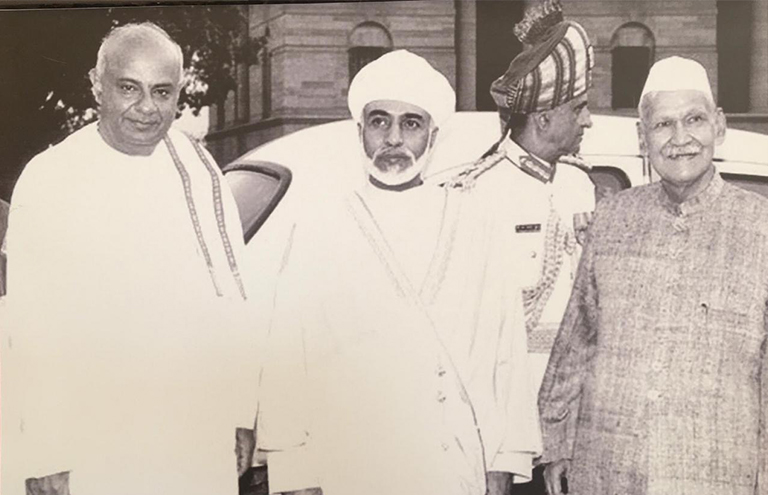

The late His Majesty Sultan Qaboos bin Said bin Taimur shared a special bond with India ever since his ascension to the throne. India also considered Sultan Qaboos as a “true friend” who provided strong leadership for developing a vibrant strategic partnership between India and Oman.
As a student, Sultan Qaboos was taught in Pune, India by Shankar Dayal Sharma who went on to become the President of India. The Sultan maintained deep respect for Sharma and he organised a grand welcome when he visited Oman in 1996 in capacity as the President of India.
Beacon of peace
Read More
- El Niño could affect rainfall, temperatures and cyclone activity in Oman
- Indian School Al Ghubra retains TAS badminton crown as Indian School Muscat finishes runner-up
- Nepal, Oman seek faster labour pact, discuss Omani embassy in Kathmandu
- TAS Conclave returns for sixth edition, putting Oman’s economic future in focus
- Oman voices solidarity with Saudi Arabia, rejects targeting of civilian facilities
Indian Prime Minister Narendra Modi described him as a beacon of peace for the region and the world. “I am deeply saddened to learn about the passing away of His Majesty Sultan Qaboos bin Said al Said. He was a visionary leader and statesman who transformed Oman into a modern and prosperous nation,” Modi tweeted.
“I will always cherish the warmth and affection I received from him. May his soul rest in peace,” Modi added.
According to the official figures from National Centre for Statistics (NCSI), there are about 6.2 lakh Indians in Oman, making them the largest community in the Sultanate.
People’s ruler
“Having stayed in that country for four years as an Indian School administrator, I have been a great admirer of his governance. The Sultan used to visit all districts at regular intervals. His interaction with common people during those visits brought him closer to ground realities,” said Retd Lt Col RVS Mani wrote in The New Indian Express.
“People adored him. He was clear that for the nation to progress, he needed the contribution of expatriates to a large extent. He gave them opportunities to grow and assist in nation-building. He recognised their hard work and carried them along,” Mani added.





